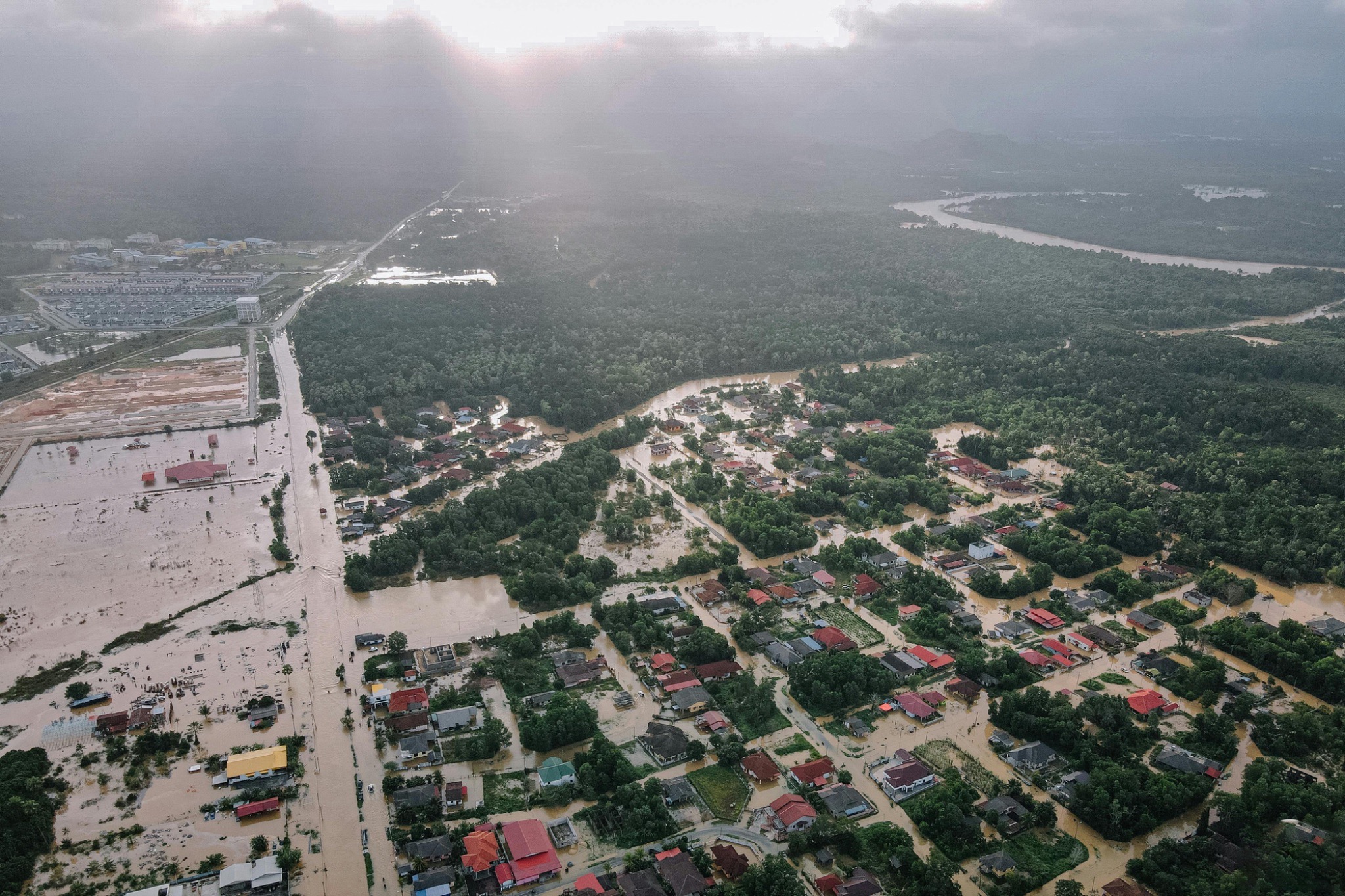
Global climate change continued to affect Malaysia’s environment and daily life in 2024, with the country recording more floods, changing weather patterns, rising waste levels, and increased travel activity.
One of the most significant impacts was the sharp rise in flood incidents. Malaysia recorded 1,345 flood cases in 2024, a big increase from 809 cases in 2023.
Sarawak was the most affected state with 459 flood incidents, followed by Terengganu (199 cases) and Kedah (101 cases). The rise highlights how extreme weather events are becoming more frequent and severe.
Temperature patterns showed mixed results. Data from 42 monitoring stations found that 33 stations recorded lower maximum mean temperatures, decreasing between 0.1°C and 1.3°C compared to 2023.
Only two stations recorded a slight increase. The Chuping station recorded the highest mean temperature in 2024 at 32.0°C, while Cameron Highlands experienced the lowest mean temperature at 17.0°C.
Rainfall levels also changed significantly. Twenty-two stations recorded higher annual rainfall, with increases ranging from 51.0 mm to 2,230.9 mm.
Kapit station in Sarawak recorded the highest rainfall at 5,624.0 mm, surpassing last year’s highest reading at Mulu. Kapit also saw the largest increase in rainfall, with an additional 2,230.9 mm, while Kuala Pilah recorded the lowest rainfall at 1,704.3 mm.
Environmental pressure was also reflected in waste generation. The amount of clinical waste rose by 11.8% in 2024, reaching 46.7 thousand metric tonnes, after two years of decline. The largest contributors were Selangor, W.P. Kuala Lumpur, and Sarawak, raising concerns about healthcare waste management and environmental sustainability.
At the same time, travel and tourism continued to recover. The number of passengers handled at Malaysian airports increased by 14.4%, reaching 97.2 million passengers, up from 85.0 million in 2023.
Tourism-related economic activity also improved, with the gross value added of tourism industries rising to RM291.9 billion, compared to RM271.9 billion the previous year.
However, airport passenger numbers have not yet returned to pre-pandemic levels, which stood at 109.5 million passengers in 2019, indicating that full recovery is still underway.
Overall, the data shows that while Malaysia is seeing economic and tourism recovery, climate change continues to place growing pressure on the environment and underscore the need for stronger climate adaptation.
Shahriena Shukri is a journalist covering business and economic news in Malaysia, providing insights on market trends, corporate developments, and financial policies. More about Shahriena Shukri.