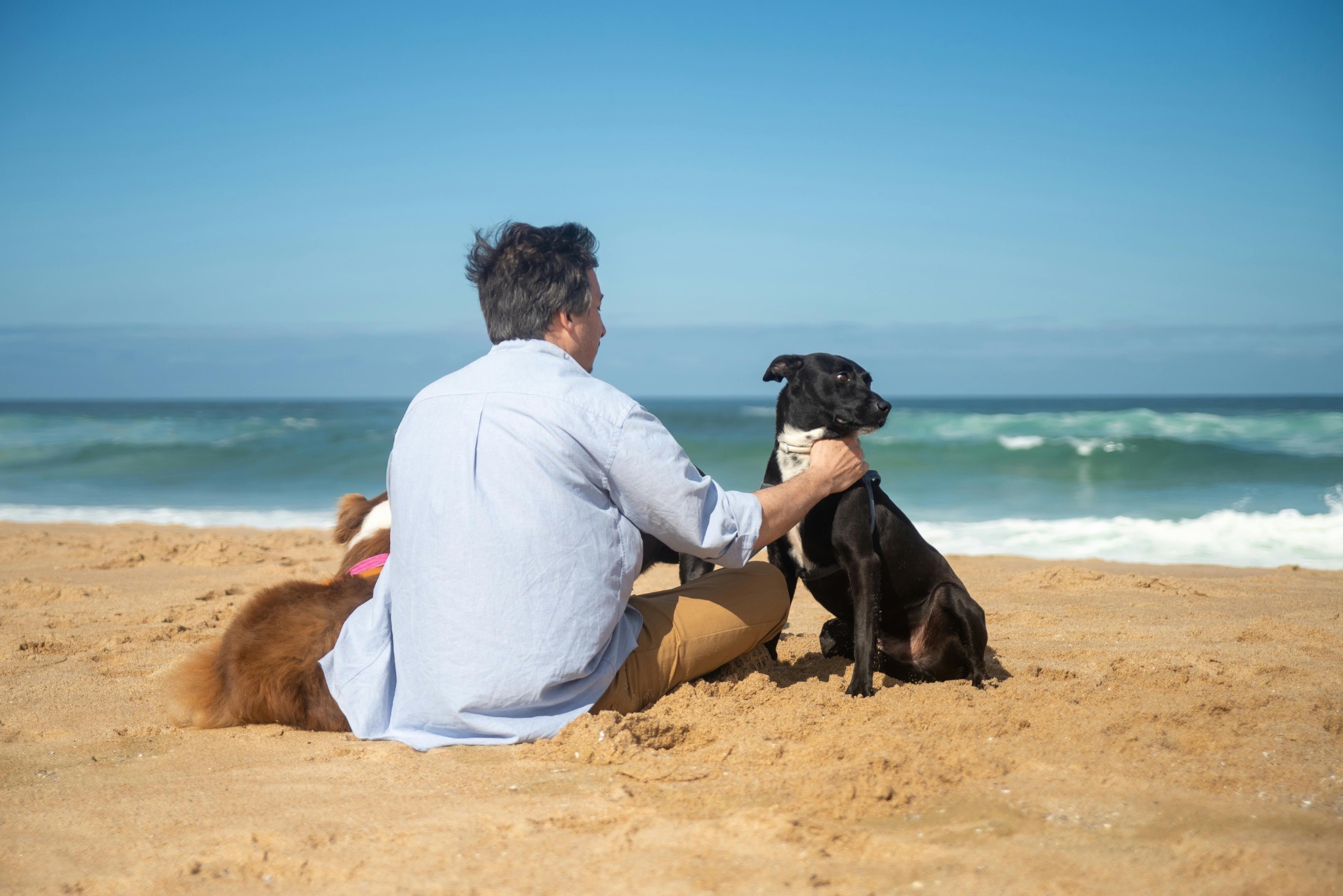
Anyone who lives with a dog has probably seen this moment before. Your dog encounters a problem it cannot solve like a stuck toy, a closed container, or food just out of reach. Some dogs quickly turn to their human, making eye contact or nudging for help. Others keep trying on their own, ignoring people completely.
According to a large scientific study, this difference is not random. It is closely linked to breed-specific cognitive traits: how dogs think, control impulses, solve problems, and interact with humans.
A Large Study of How Dogs Think
Researchers from the University of Helsinki studied more than 1,000 dogs across 13 breeds, using a series of standardised cognitive and behavioural tests. These tests measured how dogs respond to human gestures, how they solve physical problems, how well they control impulses, and what they do when faced with an impossible task.
One of the most revealing experiments was known as the “unsolvable task.” In this test, dogs were first taught how to open a box to get food. After several successful attempts, the box was secretly locked so it could no longer be opened.
The question was simple: what does the dog do next?
Asking for Help vs Solving Alone
The researchers observed three main responses:
- Human-directed behaviour: dogs looked at, approached, or tried to engage their owner or the tester.
- Independent problem-solving: dogs kept trying to solve the task on their own.
- Abandoning the task: dogs gave up and walked away.
The results showed clear differences between breeds. Some breeds were far more likely to seek help from humans, while others preferred to work independently.
Breeds such as Golden Retrievers, Australian Shepherds, Border Collies, and Australian Kelpies spent a larger proportion of time directing their attention to humans during the unsolvable task. These dogs appeared more inclined to communicate when they needed assistance.
On the other hand, breeds like German Shepherds and Belgian Malinois were more likely to continue working alone without seeking help. These dogs showed higher levels of independence during the same task.
It’s Not About Intelligence
A common misconception is that dogs who ask for help are “less smart.” The study suggests this is not true.
The researchers found no significant breed differences in memory or logical reasoning. In other words, dogs across breeds were broadly similar when it came to remembering information or making simple logical decisions.
The differences appeared mainly in social cognition, how dogs interpret and respond to humans as well as inhibitory control, which refers to impulse control and patience.
Seeking help is not a sign of weakness. Instead, it reflects a dog’s social strategy: whether it prefers cooperation or independence when faced with difficulty.
Breed History Matters

The study suggests these behaviours are linked to what dogs were historically bred to do.
Dogs bred to work closely with humans such as herding dogs and retrievers were often selected for attentiveness and cooperation. Over generations, these traits became part of their behavioural profile.
In contrast, breeds developed for roles requiring autonomy such as guarding, detection, or protection work benefited from independence and persistence without constant human input.
This helps explain why two dogs can react so differently to the same situation, even when raised in similar environments.
The researchers also note that environment and life experience can influence behaviour. However, previous studies have shown that genetic differences between breeds still play a significant role, even when training is controlled for.
Importantly, the study does not claim that every dog of a certain breed behaves the same way. Individual personality still matters. Breed tendencies describe probabilities, not certainties.
What This Means for Dog Owners
Understanding these differences can help owners:
- Set more realistic expectations
- Choose breeds that fit their lifestyle
- Interpret behaviour more accurately
A dog that constantly looks to its owner is not being needy, it may simply be wired for cooperation. A dog that ignores human help is not stubborn it may be inclined toward independent problem-solving.
Rather than asking whether a dog is “smart,” it may be more useful to ask how the dog prefers to think and work.
This research supports a broader shift in how we understand dogs not as one-size-fits-all companions, but as animals shaped by both genetics and human history.
Some dogs are natural collaborators. Others are quiet problem-solvers. Neither approach is better than the other. They are simply different ways of navigating the world.
And the next time your dog looks at you for help or pointedly refuses to, science suggests there is a long evolutionary story behind that choice.
Shahriena Shukri is a journalist covering business and economic news in Malaysia, providing insights on market trends, corporate developments, and financial policies. More about Shahriena Shukri.
.jpg)