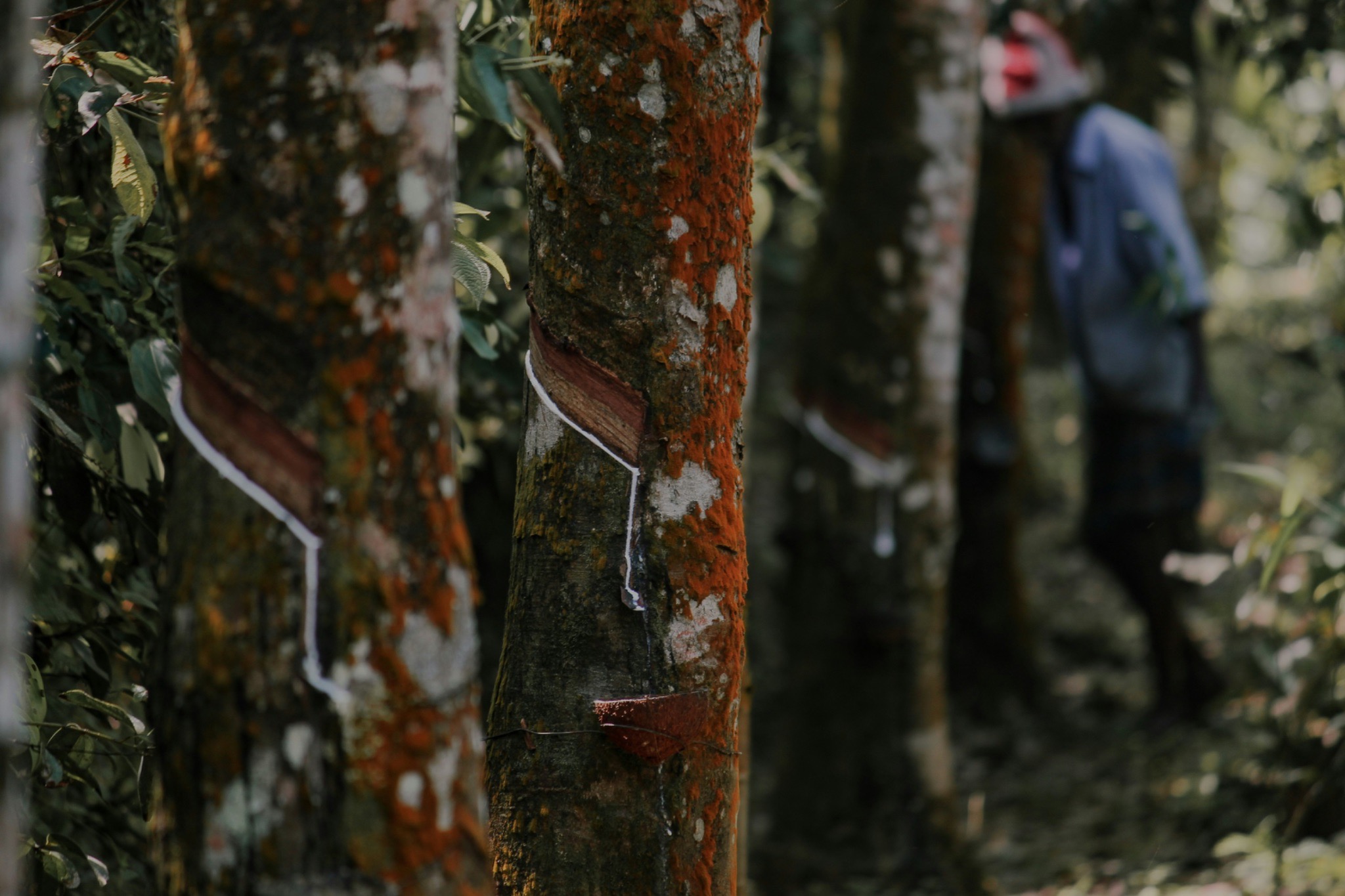
Malaysia’s natural rubber production fell 24.1% in February 2026 to 21,705 tonnes, down from 28,579 tonnes in January, according to the Department of Statistics Malaysia.
On a year-on-year basis, production declined 39.7% from 36,005 tonnes recorded in February 2025.
Smallholders remained the main producers, accounting for 87.0% of total output, while estates contributed 13.0%.
Total stocks of natural rubber increased 3.3% to 139,985 tonnes in February, compared to 135,534 tonnes in January. Rubber processors held 78.5% of stocks, followed by rubber consumers at 21.4% and estates at 0.1%.
Exports declined 20.0% to 33,897 tonnes in February from 42,386 tonnes in January. China remained the largest export destination, accounting for 48.9% of total exports. Germany followed at 17.8%, while the United Arab Emirates accounted for 10.1%.
Exports were supported by rubber-based products including gloves, tyres, tubes and rubber thread. Rubber gloves recorded an export value of RM0.9 billion in February, down 23.9% from RM1.3 billion in January.
Average prices increased during the month. Concentrated latex rose 1.8% to 586.69 sen per kg, while scrap rubber increased 2.0% to 631.13 sen per kg.
Global rubber prices also moved higher. TSR 20 increased 4.5% to USD1.93 per kg, while Singapore/Malaysia prices rose 5.4% to USD2.26 per kg.
The February data shows lower production and exports, alongside higher stocks and rising prices.
Shahriena Shukri is a journalist covering business and economic news in Malaysia, providing insights on market trends, corporate developments, and financial policies. More about Shahriena Shukri
.jpg)