Key Points
- The EU has sufficient raw materials like agricultural waste, forestry residues and non-food crops to produce renewable fuels at scale without long-term dependence on imports.
- The report states that electric vehicles cannot fully decarbonise transport, and renewable fuels are needed especially for sectors like aviation, shipping and heavy transport.
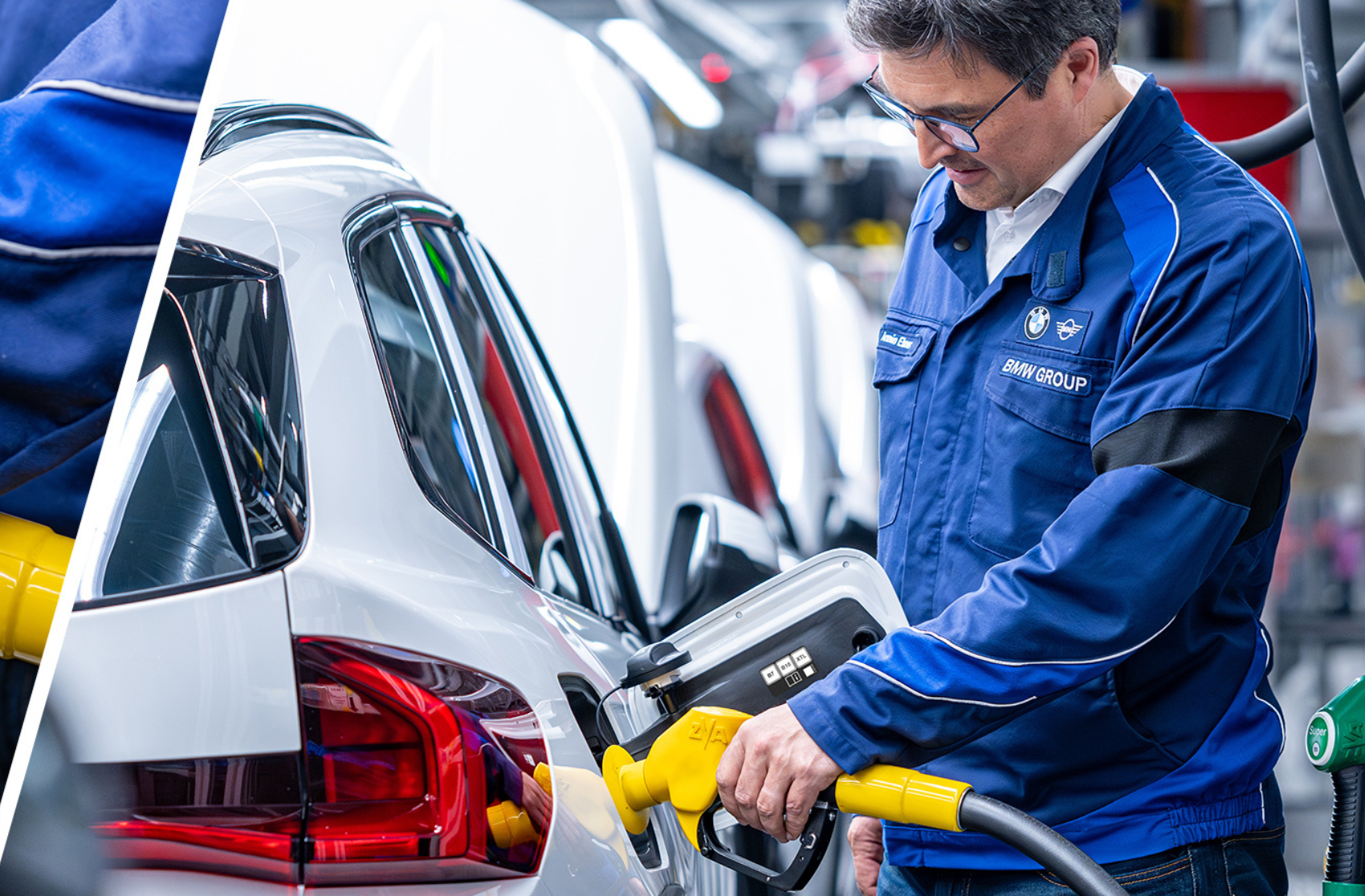
A new study commissioned by BMW and conducted by multiple European research institutions finds that renewable fuels could replace fossil fuels in road transport across Europe by 2040, provided the right policies and investments are in place.
The report, titled “From Raw Material to Fossil-Free Mobility: Europe’s Potential for a Renewable Fuel Market”, was developed by institutions including the Karlsruhe Institute of Technology (KIT), DBFZ German Biomass Research Centre, and others.
Renewable fuels needed alongside electrification
According to the study, electrification alone will not be sufficient to fully decarbonise transport. Renewable fuels, referred to as Carbon Neutral Fuels (CNF), are needed as a complementary solution.
These fuels can be used in existing infrastructure and vehicles without major modifications, making them suitable for sectors that are difficult to electrify, including aviation, shipping, and heavy transport.
EU has enough raw materials for large-scale fuel production
The study finds that Europe has sufficient raw materials to produce renewable fuels at scale, even without relying heavily on imports.
These materials include agricultural residues, forestry waste, municipal waste, and non-food crops grown on marginal land.
Contrary to common perception, widely discussed sources like used cooking oil make up only about 1% of the total available feedstock.
Up to 67% of fuel demand could be met by 2035
Based on the study’s projections:
By 2030, renewable fuels could meet 38% to 55% of EU road transport fuel demand
By 2035, this could increase to 44% to 67%
By 2040, renewable fuels could cover 67% to 107% of total demand
This means that, under favourable conditions, renewable fuels could fully replace fossil fuels and even exceed demand levels.
Imports may be needed in the short term
The study states that imports of raw materials or fuels will still be required in the early stages to achieve full substitution.
However, global biomass availability is significantly larger than Europe’s needs. According to the report, global supply could be up to 43 times higher than the EU’s import requirements.
This indicates that supply constraints are unlikely to be a long-term barrier.
Renewable fuel production will compete with other sectors such as industry, heating, aviation, and maritime transport.
The study estimates that demand from these sectors could reduce available biomass for road transport by:
- 149 Mtoe in 2030
- 188 Mtoe in 2035
- 228 Mtoe in 2040
Technology and scaling
The report identifies several challenges in scaling up renewable fuel production:
Expansion of production capacity
Efficient conversion technologies such as HVO, MtG, and MtX
Availability of hydrogen for advanced fuel processes
Investment and regulatory certainty
The study also notes that achieving full potential depends on realising biomass resources and managing competing uses.
Road transport demand expected to decline
Fuel demand in road transport is projected to decrease over time due to electrification and efficiency improvements.
By 2040, total fuel demand could fall significantly compared to current levels, making it easier for renewable fuels to meet overall needs.
The study concludes that renewable fuels can serve as a scalable solution for achieving fossil-free transport in Europe.
In the short term, imports and policy support will be necessary. In the medium term, Europe could meet its entire fuel demand using domestic renewable resources.
Shahriena Shukri is a journalist covering business and economic news in Malaysia, providing insights on market trends, corporate developments, and financial policies. More about Shahriena Shukri